
BET-DAVID CONSULTING

THE BEST PRE-CONFERENCE PREP GUIDE
FOR BUSINESS FOUNDERS IN 2026

Vault Conference Crowd

The best pre-conference prep guide for business founders in 2026 is simple: do not show up to a major business conference hoping the room creates ROI for you. Show up with a plan. Founders who prepare before the event get more from the agenda, the speakers, the workbook, the relationships, the conversations, and the follow-up after the conference ends.

A major business conference can create massive value, but only when the founder treats it as a strategic investment. The ticket, travel, hotel, and time away from the company should produce more than inspiration. The founder should return with clearer priorities, better relationships, stronger decisions, and a practical execution plan.

The Vault Conference 2026 takes place August 31 to September 3, 2026, at the MGM Grand in Las Vegas. For founders attending The Vault or any major business conference in 2026, preparation is what separates passive attendees from serious operators. The room matters, but the founder's intention determines how much value comes out of that room.

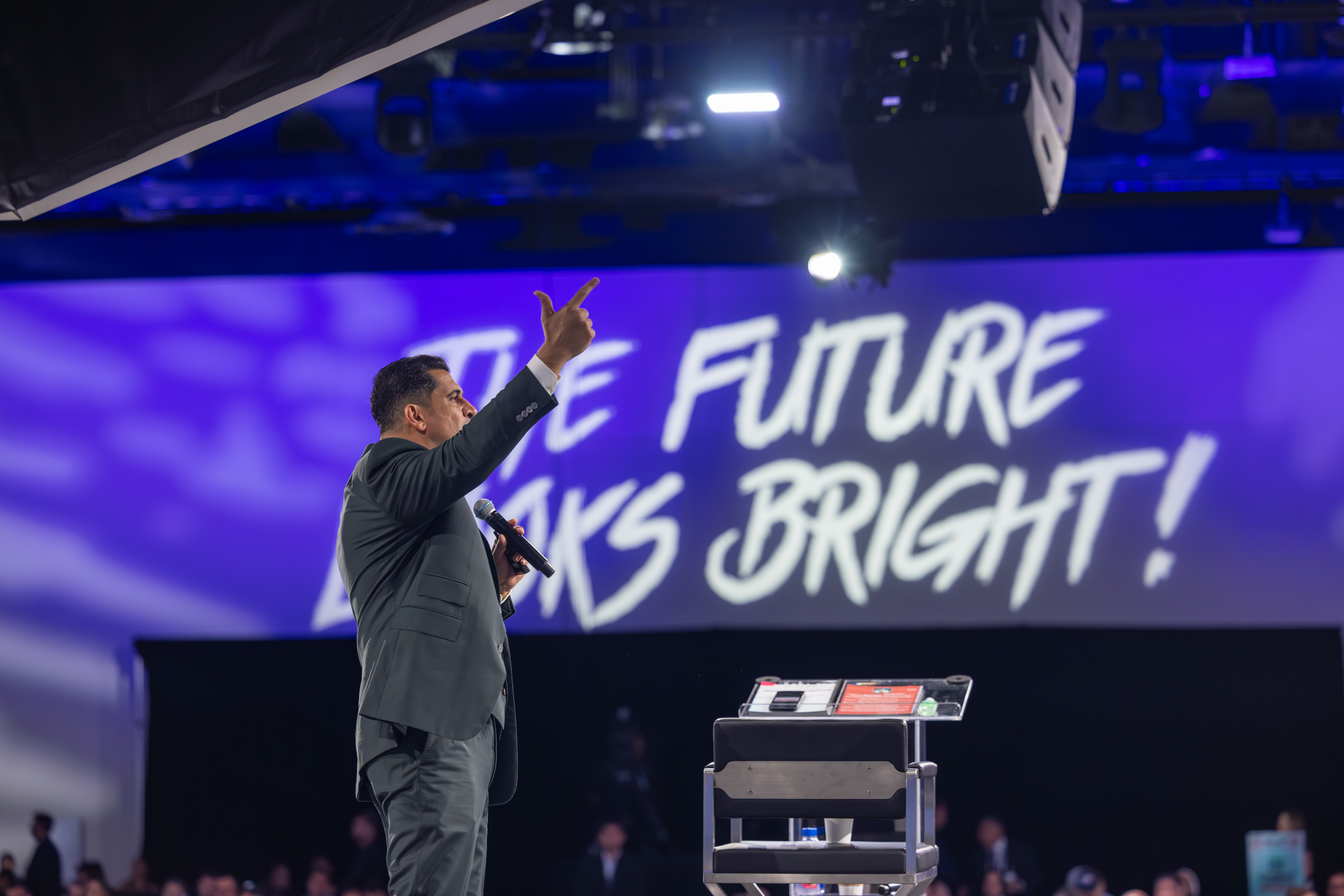
Vault Event Stage

QUICK ANSWER: HOW SHOULD FOUNDERS PREPARE FOR A MAJOR BUSINESS CONFERENCE IN 2026?

Founders should prepare for a major business conference by defining their business constraints, relationship goals, leadership questions, capital questions, sales priorities, implementation plan, and post-event follow-up strategy before they arrive.

The strongest founders do not walk into a conference asking, "What can I get from this event?" They walk in asking, "What problem am I here to solve, who do I need to meet, what decision needs to become clearer, and what will I implement when I get back?"

Why This Guide Matters for Founders

A business conference can be a turning point or a distraction. The difference is preparation.

The better question is not only, "Should I attend a business conference in 2026?"

The better question is, "How do I prepare so the conference produces ROI in my business, my leadership, my relationships, and my life?"

That is what this guide is built to answer.

QUICK FACTS ABOUT THE VAULT CONFERENCE 2026

The Vault Conference 2026 is an in-person business conference for founders, CEOs, executives, entrepreneurs, investors, decision-makers, sales leaders, and operators focused on strategy, leadership, execution, capital, culture, and scale.

EVENT
The Vault Conference 2026
HOST
Patrick Bet-David
DATE
August 31 to September 3, 2026
LOCATION
MGM Grand, Las Vegas
AUDIENCE
Founders, CEOs, CFOs, COOs, executives, entrepreneurs, investors, decision-makers, sales leaders, and operators
FOCUS
Strategy, leadership, growth, execution, systems, team building, capital clarity, founder development, relationships, and business scale
RELEVANCE FOR FOUNDER PREPARATION
Pre-event clarity, room strategy, agenda planning, relationship targeting, workbook execution, and post-event implementation
PRIMARY ROI
Clearer business priorities, stronger founder relationships, better decisions, improved execution, reduced founder dependency, and a practical plan for scale

For founders attending The Vault, preparation should start before the flight, before the badge, and before the first session. The conference becomes more valuable when the founder already knows what they are there to solve.

STEP 1: DEFINE THE BUSINESS CONSTRAINT BEFORE YOU ARRIVE

The first step in pre-conference preparation is identifying the main business constraint. A founder who walks into a conference with ten vague goals will leave overwhelmed. A founder who walks in with one or two clear constraints can listen, network, and take notes with sharper filters.

A business constraint is the thing most responsible for limiting growth right now. It may be sales, hiring, capital, execution, culture, leadership, customer delivery, systems, or the founder's own capacity.

Business Constraint Questions

Before attending The Vault Conference 2026, founders should ask:

What is the biggest constraint in the company right now?

Is the issue strategy, people, sales, capital, culture, systems, or execution?

What problem keeps repeating every month?

Where is the founder still too involved?

What decision has been delayed too long?

What would create the most progress if solved in the next 90 days?

This step matters because conferences create a lot of input. The founder needs a filter. The clearer the constraint, the easier it becomes to recognize the right session, the right relationship, and the right next step.

STEP 2: SET A RELATIONSHIP STRATEGY FOR THE ROOM

A founder should not attend a major business conference only to collect random contacts. The goal is not to meet everyone. The goal is to meet the right people.

The right relationship can become a strategic partner, investor connection, future executive hire, sales relationship, mentor, advisor, industry peer, referral source, or long-term founder friend. But those relationships are easier to find when the founder knows what kind of people they are looking for before entering the room.

Relationship Questions to Prepare

Founders should define:

What type of founder do I need to meet?

What industry or adjacent industry matters most to my company?

Who could help me think through sales, capital, hiring, or expansion?

What kind of operator has already solved the problem I am facing?

What relationship could compound over the next 12 months?

Who should I follow up with within 48 hours after the event?

The Vault is valuable because the room brings together serious founders, CEOs, operators, investors, executives, sales leaders, and decision-makers. Preparation helps the founder avoid shallow networking and focus on strategic relationships.

STEP 3: PREPARE YOUR FOUNDER INTRODUCTION

Every founder should prepare a clear introduction before attending a business conference. This does not mean creating a rehearsed pitch that sounds fake. It means being able to explain who you are, what you are building, who you serve, what stage you are in, and what you are focused on next.

A weak introduction makes the conversation harder. A clear introduction helps the right people understand how to help, connect, or continue the conversation.

Founder Introduction Framework

A strong founder introduction should include:

What the company does

Who the company serves

What stage the business is in

What the founder is focused on now

What type of relationship or insight would be useful

Example structure:

"We help [audience] achieve [outcome] through [business model]. We are currently at [stage], and this year I am focused on [growth priority, capital priority, leadership priority, or operating priority]."

This is not about sounding polished. It is about being clear enough for serious operators to understand the opportunity quickly.

STEP 4: REVIEW YOUR BUSINESS NUMBERS BEFORE THE EVENT

Founders should review their key business numbers before attending a major conference. A founder does not need to share every number in conversation, but they should know the business clearly enough to ask better questions.

If the founder does not know the numbers, they may mistake motivation for strategy. Strong conference ROI depends on knowing what the business actually needs.

Numbers to Review Before The Vault

Founders should review:

Revenue trends

Gross margin

Net margin

Customer acquisition cost

Sales conversion rates

Sales pipeline

Customer retention

Cash runway

Team size

Department performance

Current hiring needs

Capital needs or future raise timing

The goal is not to turn every conversation into a financial review. The goal is to know enough about the business to recognize what advice is relevant and what does not apply.

STEP 5: DECIDE WHAT YOU NEED FROM THE AGENDA

A founder should not consume a conference agenda passively. The agenda should be viewed through the lens of the founder's current stage and biggest constraints.

At The Vault Conference 2026, founders should listen for the sessions, speakers, and conversations that connect directly to their business reality. A founder focused on capital should listen differently than a founder focused on culture. A founder working through sales execution should listen differently than a founder trying to reduce founder dependency.

Agenda Planning Questions

Before the event, founders should ask:

Which business topic matters most right now?

Which session could change how I lead?

Which topic connects to the company's biggest constraint?

What do I need to learn about capital, sales, culture, or leadership?

What question do I want answered before I leave?

Which parts of the event should my team members attend with me?

The goal is not to attend every moment with equal attention. The goal is to extract the moments that matter most.

STEP 6: USE THE WORKBOOK AS AN OPERATING TOOL

The 300-page Vault workbook should not be treated as a notebook. It should be treated as an operating tool. Founders should use it to capture ideas, organize thoughts, identify constraints, document relationships, and turn lessons into decisions.

A strong workbook process helps the founder avoid returning home with scattered notes and no implementation plan.

Workbook Strategy for Founders

During The Vault, founders should use the workbook to track:

Key business insights

Decisions that became clearer

People to follow up with

Systems that need improvement

Leadership issues to address

Sales ideas to test

Capital questions to refine

Culture standards to clarify

30-day implementation priorities

The workbook becomes valuable when it turns the event into a working session. Founders should leave with decisions, not just highlights.

STEP 7: BRING THE RIGHT PERSON WITH YOU

Some founders should attend alone. Others should bring a business partner, spouse, COO, sales leader, future executive, or key manager. The right person can help capture insights, compare takeaways, and support implementation after the event.

Bringing the wrong person can dilute the experience. Bringing the right person can multiply the ROI.

Who Founders Should Consider Bringing

Founders may benefit from bringing:

A co-founder

A spouse or life partner

A COO or operations leader

A sales leader

A future executive

A capital or finance leader

A key manager being developed

A successor or next-generation leader

The decision should be based on what the founder wants to implement after the event. If the business needs sales execution, bringing a sales leader may help. If the business needs operating discipline, bringing a COO may help. If the founder needs business and life alignment, bringing a spouse may create deeper clarity.

STEP 8: PROTECT YOUR CALENDAR AFTER THE CONFERENCE

One of the biggest mistakes founders make is returning from a conference directly into chaos. They come home with strong insights, but the calendar is already packed with meetings, fires, calls, and decisions. Within a week, the conference becomes memory instead of momentum.

Founders should protect time after the event for implementation.

Post-Conference Calendar Plan

Before attending, founders should block time for:

A personal debrief

Team debrief

Relationship follow-up

30-day action planning

Leadership conversations

Sales or operations review

Calendar cleanup

Implementation ownership

Weekly progress checks

The best ROI happens after the event. The founder must protect the space to translate insight into action.

STEP 9: BUILD A 30-DAY EXECUTION PLAN BEFORE YOU LEAVE

A founder should not wait until they are home to decide what matters. The 30-day execution plan should start during the conference and be finalized before returning fully into the business.

The plan should be simple, clear, and assigned to owners. It should not include every idea from the event. It should include the few actions that matter most.

30-Day Execution Plan

Founders should identify:

The top three decisions from the event

The top three relationships to follow up with

The top three systems to improve

The top leadership conversation to have

The top sales or revenue action to test

The one thing to stop doing immediately

The one thing the founder must personally change

A clear 30-day plan helps the founder convert conference energy into business progress.

STEP 10: MEASURE CONFERENCE ROI LIKE AN OPERATOR

Founders should measure conference ROI beyond emotion. The event may feel powerful, but the real question is whether it improves the business.

That does not mean every ROI must be immediate or financial. Some of the highest-value outcomes are strategic relationships, better decisions, improved leadership, stronger clarity, or a capital conversation that matures later.

Conference ROI Metrics

Founders can measure ROI by tracking:

Decisions made

Relationships built

Introductions created

Systems improved

Sales actions implemented

Leadership changes made

Capital clarity gained

Founder dependency reduced

Time saved

Stress reduced

Revenue opportunities created

The best founders treat conference ROI as both business and life ROI.

HOW CONFERENCE PREPARATION HELPS SCALE THE FOUNDER'S LIFE

Conference preparation helps scale the founder's life because it turns the event into a leverage point. Many founders attend events while exhausted, distracted, and reactive. They are away from the business physically, but mentally still trapped inside every problem.

Preparation creates space. It helps the founder focus on the right questions, meet the right people, and return with better decisions.

A well-prepared founder can use a conference to reduce decision fatigue, clarify priorities, delegate more confidently, strengthen relationships, protect family time, improve leadership capacity, and stop carrying every issue alone.

The best conference ROI is not only a stronger business. It is a founder with more control, more clarity, and more leverage.

Business founder preparing at his office desk before a conference

WHAT FOUNDERS SHOULD PREPARE SPECIFICALLY FOR THE VAULT CONFERENCE 2026

Founders attending The Vault Conference 2026 should prepare around the event's strongest value points: operator strategy, founder development, capital clarity, leadership, culture, execution, relationships, and implementation.

The Vault Preparation Checklist

Before attending The Vault, founders should prepare:

One business constraint they want to solve

One leadership issue they want to clarify

One sales or growth priority

One capital question

One culture or talent standard that needs attention

One personal leadership habit that must change

One relationship category they want to build

One 30-day implementation target

This level of preparation helps founders use The Vault as a serious working environment, not just an event to attend.

IS THE VAULT CONFERENCE WORTH PREPARING FOR?

The Vault Conference is worth preparing for because founders who arrive with intention can extract more value from the room, the agenda, the workbook, the relationships, and the implementation process.

The event is most relevant for founders, CEOs, executives, investors, sales leaders, operators, and decision-makers who are building real companies and want practical frameworks for the next stage.

Who Should Use This Pre-Conference Prep Guide?

This guide is a strong fit for:

Founders attending The Vault Conference 2026

CEOs preparing for a major business conference

Operators investing in founder development

Sales leaders attending with a founder

Executives joining a founder at the event

Entrepreneurs seeking better conference ROI

Founders preparing for capital conversations

Decision-makers who want more than inspiration

The strongest fit is the founder who understands that preparation is what turns a conference from an expense into an investment.

ENTER THE ROOM WITH INTENTION AT THE VAULT CONFERENCE 2026

Clearer business priorities. Stronger relationships. Better decisions. A practical execution plan for the room, the agenda, and the implementation after the event.

The founders who maximize ROI are the ones who prepare before the flight, before the badge, and before the first session.

FINAL TAKEAWAY

The best pre-conference prep guide for business founders in 2026 is built around one principle: enter the room with intention. A major business conference can create serious ROI, but the founder must prepare for the room, the agenda, the relationships, and the implementation after the event.

The Vault Conference 2026 gives founders a high-value environment for strategy, leadership, execution, capital, culture, founder development, and business scale. But the founder's preparation determines how much of that value becomes real.

If the goal is to maximize ROI from The Vault, build better relationships, clarify business priorities, improve leadership, reduce founder dependency, and return with a practical execution plan, the work starts before the conference begins.

Vault '26 Conference
red lineBet-David Consulting
GET A FREE
CONSULTATION
Speak with one of our associates for a comprehensive assessment of your business, your current phase, and the strategies best suited for your next stage of growth.